

Every family has a story waiting to be discovered. Some stories are found in faded photographs, handwritten letters, old census records, or marriage certificates. Others are hidden in memories passed down through generations. Building a family tree allows you to collect these pieces and preserve them for the future. However, a truly meaningful family tree is about much more than recording names and dates. It is about documenting the relationships that connect every generation.
When people begin researching their ancestry, they usually focus on finding birth records, death certificates, military documents, immigration records, and historical photographs. While these records are essential, they only tell part of the story. Understanding how two people were connected provides the context that transforms simple facts into a complete family history.
Relationships define families. They explain how branches grow, how generations connect, and how family traditions continue through time. Recording these relationships accurately ensures your genealogy remains valuable for future descendants who may one day continue your research.
Every Relationship Has a Story
No two families are exactly alike. Some couples spent their entire lives together, while others experienced divorce, remarriage, separation, or widowhood. Some relationships began with engagement and marriage, while others developed into lifelong partnerships without a formal ceremony. Every one of these situations represents an important chapter in your family's history.
Ignoring relationship details can create confusion for future researchers. Children may appear connected to the wrong parents, surnames may seem to change without explanation, and historical records may become difficult to interpret. By documenting relationship status carefully, you create a family tree that accurately reflects the lives of the people it represents.
Genealogy is not about creating the perfect family. It is about preserving the true family story.
Why Relationship Status Matters
Relationship status provides valuable information that supports better genealogy research. It helps explain household structures found in census records, identifies blended families, and clarifies multiple marriages that occurred throughout a person's lifetime.
For example, if an ancestor married more than once, documenting each relationship separately makes it easier to understand how different branches of the family are connected. Likewise, recording widowhood or divorce can explain why family members appear in different locations or under different surnames in historical records.
These details become even more valuable when sharing your family tree with relatives. Clear relationship information prevents misunderstandings and allows everyone to appreciate the complete family history rather than only a collection of individual records.
Choose a Status for a Couples Relationship
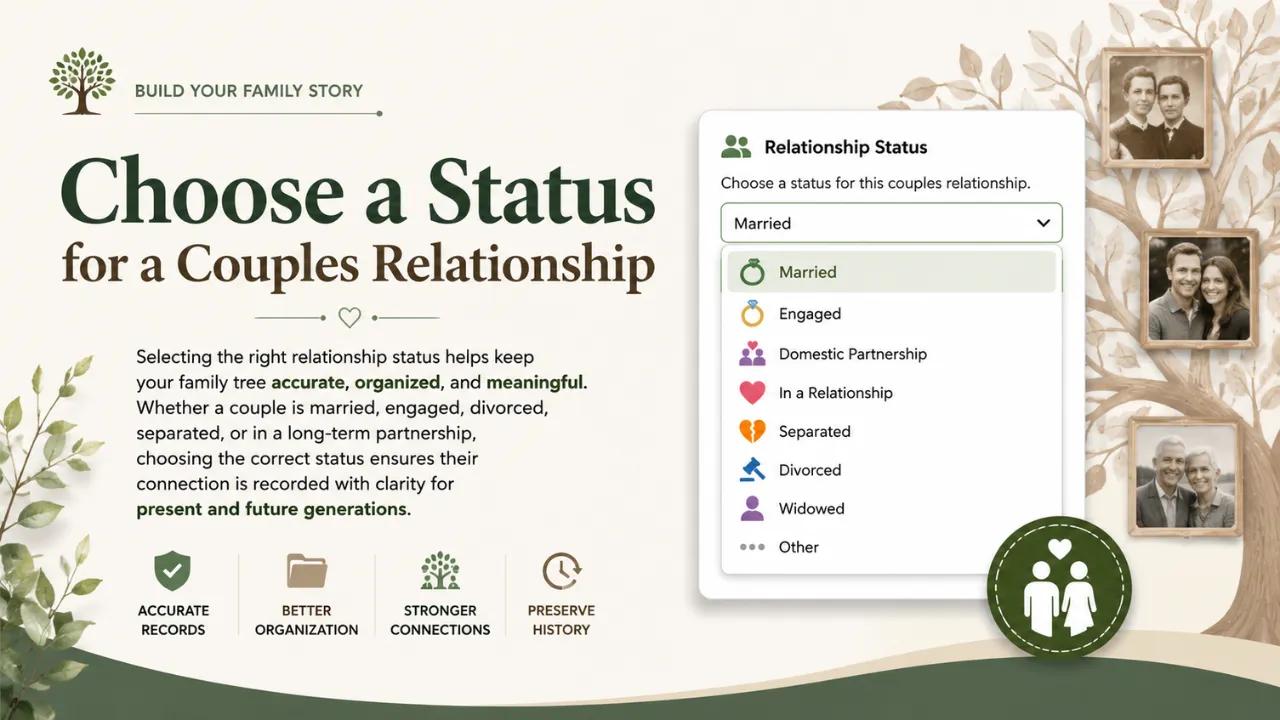
As you continue building your genealogy database, remember to Choose a status for a couples relationship whenever you add or update two individuals. Whether the couple is married, engaged, divorced, separated, widowed, or in another recognized partnership, selecting the appropriate status helps create a more accurate and organized family tree.
This small decision improves record consistency, supports better reporting, and makes your genealogy easier to understand. It also helps genealogy software organize family connections correctly, reducing duplicate records and improving the quality of charts and reports.
Accurate relationship information becomes increasingly valuable as your family tree grows. What seems like a minor detail today can become an essential clue for future generations researching the same family.
Best Sources for Verifying Relationships
Reliable genealogy depends on evidence rather than assumptions. Before updating relationship information, always look for supporting historical records. Official marriage certificates are among the most reliable sources, but they are not the only option.
Church registers often contain valuable information about marriages and family relationships. Census records can reveal household structures and family members living together during specific years. Newspaper announcements frequently provide engagement notices, wedding details, anniversaries, divorces, and obituaries. Probate files, wills, cemetery records, military documents, and family letters can also confirm important relationships.
Speaking with older relatives is another excellent research method. Personal memories, family photographs, diaries, and handwritten notes often contain details that cannot be found in official archives.
Whenever possible, compare multiple sources before making changes to your family tree. Cross-checking information improves accuracy and strengthens the credibility of your research.
Common Mistakes to Avoid
One of the biggest mistakes in genealogy is assuming that every couple with the same surname belongs together. Similar names do not always indicate the same family. Another common error is recording relationship status without supporting evidence.
Avoid leaving relationship fields blank simply because information is incomplete. Instead, add research notes explaining what you know and what still needs verification. This approach helps you continue your investigation without introducing inaccurate information.
It is also important to review your genealogy database regularly. As new historical records become available online, you may discover additional information that improves existing relationship records.
The Value of Accurate Genealogy
A carefully documented family tree becomes more than a personal project. It becomes a historical resource that preserves the experiences of generations past. Future family members will rely on your work to understand where they came from, how their ancestors lived, and how different branches of the family developed over time.
Accurate relationship records also make collaboration easier. When relatives contribute information or compare research, clear relationship details reduce confusion and help everyone build upon the same reliable foundation.
Whether you are creating a family tree for your children, writing a family history book, or preserving generations of research, every accurate relationship strengthens the value of your work.
Final Thoughts
Genealogy is a journey of discovery, but it is also a responsibility. Every record you add becomes part of your family's legacy. Taking the time to document relationship status correctly ensures that your family tree tells an honest, complete, and meaningful story.
By verifying historical records, keeping relationship details current, and carefully documenting every family connection, you create a genealogy resource that future generations can trust. Long after today's research is complete, your family tree will continue to educate, inspire, and connect descendants with the people whose lives shaped their own history.